
What is The Human Element
The Human Element exists because trust is getting harder to earn. Your audience sees thousands of images a day. A lot of them feel fake. AI content is fast, cheap, and everywhere. Stock photos still haunt the internet. Over edited work keeps trying to look perfect, and it ends up looking empty.
People are starting to push back. They do not announce it. They just stop paying attention. They do not click. They do not buy. They do not believe you.
That is the problem The Human Element solves.
The Human Element creates visuals that feel real. Not staged. Not plastic. Not built to trick anyone. Photos and video that show an actual person, an actual place, and an actual moment. Work that carries emotion and proof. Proof that you are real. Proof that you care. Proof that your product has quality.
Why it needs to exist
The market is noisy and getting noisier. Cheap content makes real brands look cheap. When your visuals look generic, people assume your work is generic. Credibility is fragile, and most brands leak it with lazy content.
The Human Element is for brands and people who want to show up with something honest. Something that earns attention the right way.
What you are really buying
You are not buying a photoshoot. You are buying clarity. You are buying a process that produces publish ready assets without chaos. You are buying work that makes your brand look solid.
The goal is simple. Create images and video that make someone stop, feel something, and trust what they are seeing.
The customer is the hero
You are the hero because you have the stakes. You have a product to sell. You have a reputation to protect. You have a team that needs assets fast. You have to stand out without looking like you are trying too hard.
You do the hard part. You built the thing. You are taking the risk. You are the one who has to win.
The Human Element is the guide
My job is not to be the center of the story. My job is to get you across the finish line.
I guide the process so you do not waste time or money. We set the goal. We define the deliverables. We lock a clear plan. We shoot on schedule. We deliver fast.
That is why the process matters. It is four steps with checkpoints, so it stays easy to plan and easy to approve.
Scope and quote. You know exactly what you are buying.
Schedule and prep. No surprises on shoot day.
Capture. Focused coverage that matches the plan.
Edit and deliver. Finished files, organized, ready to publish.
What happens if you do nothing
You blend in. You look like everyone else. You lose attention. You lose trust. You lose the sale.
In this AI flooded environment, weak visuals make a real brand look like a knockoff. People assume the product matches. That is the quiet death most businesses never see coming.
What success looks like
Your visuals look real. They feel human. They communicate quality without trying to shout.
Your audience stops scrolling. They trust what they see. They take the next step.
That is The Human Element. Simple work. Real emotion. Clear outcomes.
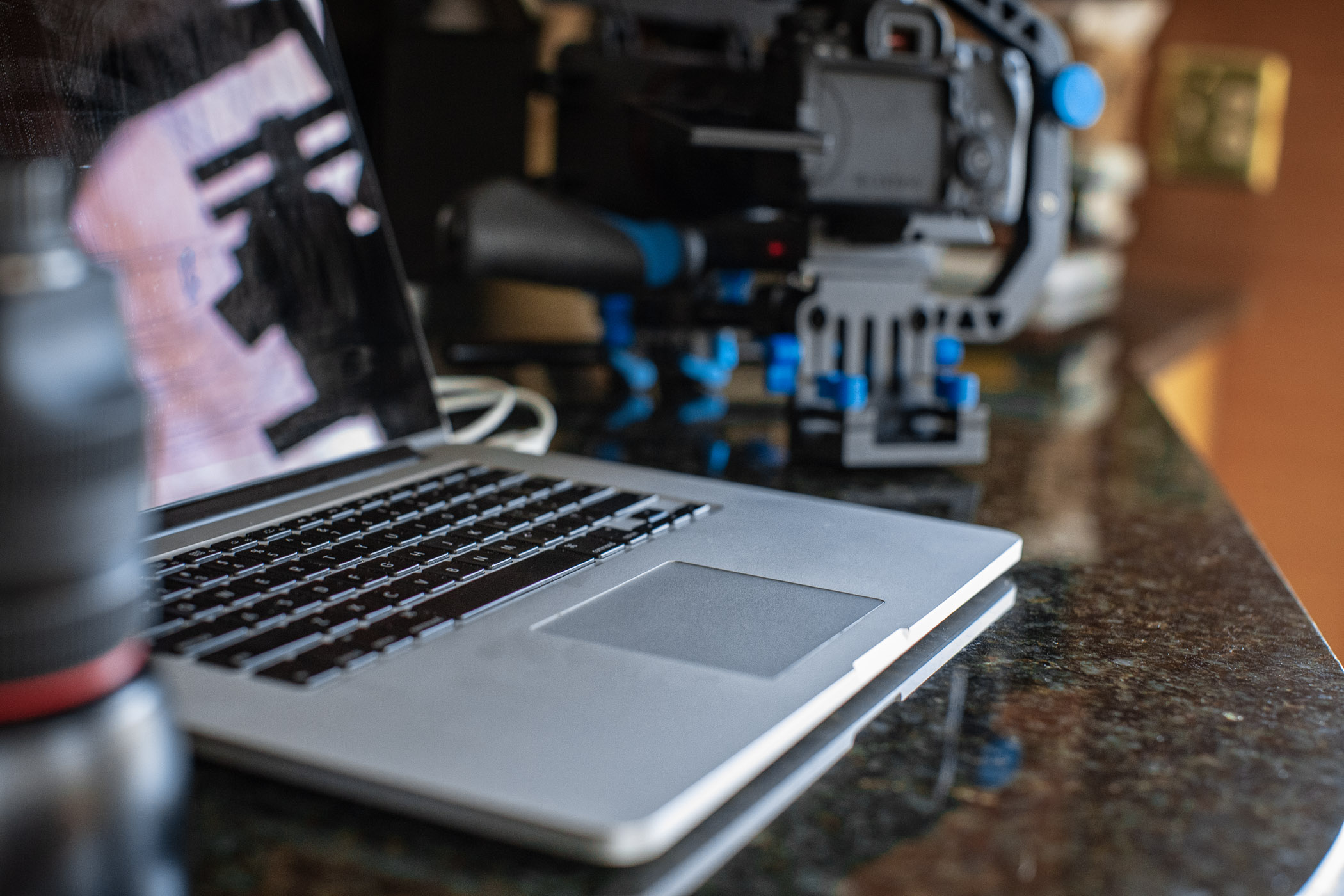
One Workflow, Three Scales, From a War Zone to a Studio
I learned photography inside a machine. The Marine Corps does not care about your vibe. It cares about speed, accuracy, and not losing files. That pressure forces a system. A real one.
Years later, I realized something useful for my information systems brain. The system did not belong to the Corps. The system belonged to the work. Capture. Move data. Protect it. Find it later. Deliver it fast. That is the whole mission.
Now I run that same logic at three scales. A minimalist kit. A home studio. A commercial studio. Same backbone. Different footprint.
The point is simple. Build once. Scale up or down without chaos.
What the “big system” taught me
In a large organization, the camera is the easy part. The hard part is information management.
You need:
A defined workflow. Not a vibe.
Clear checkpoints. So nothing disappears between steps.
Naming rules. So anyone can find anything.
Storage rules. So files survive people, computers, and time.
A delivery standard. So the end user gets the right thing, every time.
That is systems thinking. You design the whole pipeline, not one task. You treat images and video like business assets, not random files.
The workflow never changes
No matter the size, I run the same four phases.
- Capture
You shoot with intent. You know what success looks like before you press record. - Ingest and verify
You copy files off cards. You verify the copy. You do not delete cards until you confirm you have what you think you have. - Process and produce
You cull. You edit. You version outputs for where they will live. - Deliver and archive
You deliver in a predictable structure. You archive with redundancy. You can find it later without guessing.
Everything else is just tools.
Scale 1, the minimalist field kit
This is the version you can run from a laptop and two drives. It is fast. It is portable. It works when you are living out of a backpack.
Core setup:
Laptop
Two external drives
Card reader
A simple folder and naming standard
Process:
Ingest to the laptop
Copy to Drive A
Mirror to Drive B
Verify the copy before formatting cards
Edit off the laptop or off Drive A, depends on speed
Export into a delivery folder with clean names
The rule that keeps you safe:
Never have one copy of anything. Ever.
If you want one move that fixes 80 percent of problems, do this.
Make a single “Job Root” folder and never break it.
Example:
Client_Project_Date
01_RAW
02_SELECTS
03_EDITS
04_EXPORTS
05_DELIVERY
06_ADMIN
That structure is boring. That is why it works.
Scale 2, Studio 1108 home studio workflow
At home, you gain stability. You can build a better backbone without losing the simplicity.
What changes:
You add a primary working drive, fast SSD or RAID
You add an automated local backup
You add a cloud backup for the critical stuff
Process upgrade:
Ingest to the working drive
Auto backup runs to a second local drive
Cloud sync runs for selects, edits, exports, and documents
RAW can be cloud backed too, depends on budget and bandwidth
This is where the MIS concepts show up in a real way.
You are designing an information system with roles, rules, and controls.
Controls:
Checkpoint after ingest, verified copies exist
Checkpoint after selects, you lock the selects folder
Checkpoint after deliverables, you lock the delivery set
Change control, you do not overwrite finals, you version them
This is the difference between “I edited it” and “I can reproduce it.”
Scale 3, the commercial studio version
Now you are dealing with teams, clients, larger campaigns, and repeatable production. That means you need standardization and handoffs.
What changes:
Central storage, usually NAS with redundancy
User permissions, not everyone touches everything
A defined handoff process between capture, edit, deliver
A real archive strategy, cold storage, cloud archive, or both
Optional, a cataloging layer for search and retrieval
At this scale, your folders are not enough by themselves. You need metadata discipline.
Keywords
Project codes
Usage notes
Licensing notes
Model releases linked to the job
This is data management. The photos are the asset. The metadata is what keeps the asset usable.
A simple way to think about it
I use a three layer model. It scales clean.
Working layer
Fast storage for active jobs. This is where editing happens.
Backup layer
Automatic, continuous backup. Local first.
Archive layer
Long term storage. Offsite. Cold. Cheap per terabyte.
That is it. Three layers. One workflow.
Why this matters right now
Content is getting flooded. AI content is fast and cheap, and it is everywhere. That pushes real brands into a corner. If your visuals look generic, people assume your product is generic. They stop trusting. They stop buying.
A good workflow is not just operational. It is strategic.
It lets you deliver consistently.
It lets you move fast without cutting corners.
It protects your reputation because you do not lose files and you do not miss deadlines.
What you can steal from this today
If you do nothing else, steal these five rules.
- One job, one root folder, always.
- Two local copies before you format cards.
- A clear naming system that does not rely on memory.
- A delivery folder that matches how clients use files.
- An archive plan that survives your next computer.
That is the minimalist version of a big organization system. Same bones. Less weight.

The Desolate Beauty of Greenland
Ballet and Pilates inspired workouts are great if you want to build long, lean “beauty” muscles, but thanks to CrossFit, I’ve grown to appreciate the glamour of women who deadlift, pull up and muscle up — and not because the effort.

Favorite Images of 2019: A Retrospective
Lorem ipsum dolor sit amet, consectetur adipiscing elit. Integer nec odio. Praesent libero. Sed cursus ante dapibus diam. Sed nisi. Nulla quis sem at nibh elementum imperdiet. Duis sagittis ipsum. Fusce nec tellus sed augue semper porta.

Canon EOS R Full Frame Mirrorless Camera
Curabitur sodales ligula in libero. Sed dignissim lacinia nunc. Curabitur tortor. Pellentesque nibh. Aenean quam. In scelerisque sem at dolor. Maecenas mattis. Sed convallis tristique sem. Proin ut ligula vel nunc egestas porttitor morbi lectus risus.

The Photographer Platform
Quisque volutpat condimentum velit. Class aptent taciti sociosqu ad litora torquent per conubia nostra, per inceptos himenaeos. Nam nec ante. Sed lacinia, urna non tincidunt mattis, tortor neque adipiscing diam, a cursus ipsum ante quis turpis.
Quisque cursus, metus vitae pharetra auctor, sem massa mattis sem, at interdum magna augue eget diam. Vestibulum ante ipsum primis in faucibus orci luctus et ultrices posuere cubilia Curae; Morbi lacinia molestie dui. Praesent blandit dolor. Sed non quam.
Audio Title
Integer lacinia sollicitudin massa. Cras metus. Sed aliquet risus a tortor. Integer id quam. Morbi mi. Quisque nisl felis, venenatis tristique, dignissim in, ultrices sit amet, augue. Proin sodales libero eget ante. Nulla quam. Aenean laoreet.

The Desolate Beauty of Greenland
Fusce nec tellus sed augue semper porta. Mauris massa. Vestibulum lacinia arcu eget nulla. Class aptent taciti sociosqu ad litora torquent per conubia nostra, per inceptos himenaeos. Curabitur sodales ligula in libero. Sed dignissim lacinia nunc.
Morbi lectus risus, iaculis vel, suscipit quis, luctus non, massa. Fusce ac turpis quis ligula lacinia aliquet. Mauris ipsum. Nulla metus metus, ullamcorper vel, tincidunt sed, euismod in, nibh. Quisque volutpat condimentum velit. Class aptent sociosqu.